Imagine you want to build something smart—say, a program that can recognize pictures of cats. There are two main ways to go about this. One is the old-school method, where a programmer writes out a detailed recipe—step by step, rule by rule. The other? You plant a seed, water it, give it sunlight, and let it grow into something smart on its own.
This is the key difference between traditional AI and AI built using neural networks. Let’s explore what that means, and why it matters.
1. Traditional AI: The Rulebook Approach
Think of traditional AI like building a machine from Lego. You, the programmer, decide exactly how every part should work. You write rules like:
- “If the object has whiskers and pointy ears, it might be a cat.”
- “If it has four legs and purrs, it’s even more likely a cat.”
This is called rule-based AI or symbolic AI. It works well when the world is simple and clear-cut. It’s like making a robot follow a strict set of instructions: predictable, logical, and explainable.
But life isn’t always that tidy. What if the cat is in shadow? What if it’s curled up and half-hidden under a blanket? Now your rules start to fall apart. You’d need hundreds or thousands of rules to catch all the possibilities.
2. Neural Networks: The Gardening Approach
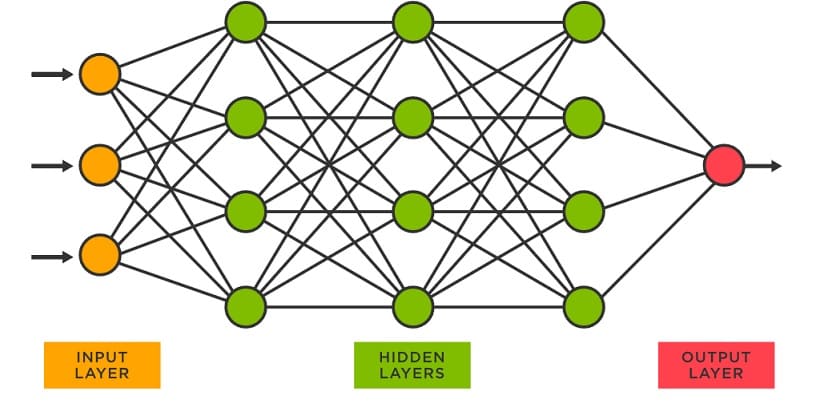
Now let’s try a different strategy. Instead of writing rules, you train a neural network. This is like planting a seed and helping it grow.
You show it thousands of pictures—cats, dogs, cars, trees. Each time, you tell it what’s in the picture. The AI starts out clueless, but over time, it adjusts itself based on what it sees. It slowly gets better at figuring out, “Aha! This shape usually means ‘cat.'”
The programmer isn’t writing rules—they’re creating the right environment, providing data (sunlight, water, nutrients), and letting the network grow its own understanding.
This process is called machine learning, and neural networks are a type of machine that learns by example rather than by being told what to do.
3. Predictability vs. Flexibility
Traditional AI is like a robot that only does what it’s told. If something unexpected happens, it gets confused.
Neural network AI is like a child who has learned from experience. It can handle new situations more flexibly—even if it can’t always explain exactly how it made its decision.
But this comes with trade-offs:
- Neural networks are less predictable and harder to understand.
- Traditional AI is clear and controllable, but struggles with messy, real-world tasks like understanding speech or recognizing faces.
4. Why This Matters Today
Most of the AI you hear about today—ChatGPT, image recognition, voice assistants—are based on neural networks. They weren’t programmed line-by-line. They were trained on massive amounts of data to learn patterns and behaviors.
That’s why they can be so impressive… and also why they sometimes make mistakes that seem strange or unpredictable. They’re more like trained plants than finely tuned machines.
Conclusion: Two Paths to Intelligence
Both types of AI have their place. If you want a robot to follow safety rules at a nuclear plant, you probably want traditional AI. If you want it to understand spoken language or recognize emotions, neural networks are the better choice.
In the end, building AI is a bit like choosing how to grow a garden. Sometimes, you want precision planting. Other times, you just need to water the soil and let intelligence bloom.