The world is on the verge of witnessing the birth of the first privately held company worth one trillion dollars—and it’s all thanks to artificial intelligence.
Imagine going back two years, when everyone was buzzing about the soaring stock price of NVIDIA, the maker of AI chips. If you had managed to bet part of your capital on this company back then, your investment would have quadrupled by now. Today, NVIDIA has become the first company in history to reach a staggering market valuation of $4 trillion—a figure on par with the entire GDP of countries like Japan or India, and even surpassing economic powerhouses like the UK, France, Canada, and Brazil.
These legendary profits have left a deep sense of envy among Silicon Valley’s godfathers—the venture capitalists. Once the champions of unknown startups, they now look longingly at corporate giants that are skyrocketing overnight in public markets. And it’s not just about NVIDIA anymore; lesser-known companies like CoreWeave have also multiplied their valuations several times over in just a few months.
Now, the game has changed. Investors, euphoric over the AI boom, are in no hurry to sell their golden geese. They want to keep the most promising startups private for as long as possible, so they can capture the full bounty of their astronomical growth. The question is no longer whether the world will see its first trillion-dollar private company—but when. This high-stakes race is rewriting the rules of Silicon Valley.
From a Harsh Winter to the AI Frenzy
As recently as 2023, the venture capital industry was stuck in a deep freeze. In 2021, at the peak of the pandemic-era investment boom, 344 unicorns—startups valued at over $1 billion—were born in the U.S. Just two years later, as interest rates climbed, that number dropped to a mere 45. Many of those lofty valuations, like the mythical names of the startups themselves, turned out to be illusions. The billion-dollar unicorns became “zombie unicorns”—hollow giants with inflated, unsustainable values.
But then, generative AI reignited Silicon Valley with a fervor that may be even hotter than the last cycle. According to data from PitchBook, nearly two-thirds of all venture capital investments in the U.S. in the first half of this year went into AI-focused companies. Now, it’s not just unicorns people talk about—it’s decacorns (worth over $10 billion) and hectocorns (worth over $100 billion).
At the heart of this storm stands OpenAI, creator of ChatGPT, boasting a jaw-dropping valuation of $300 billion. Investment firm Coatue estimates that the total value of private companies worth $50 billion or more has now exceeded $1.3 trillion—double what it was just two years ago.
The Great Bet on the Future
These astronomical valuations are, in part, fueled by an abundance of capital. Last year, the assets under management of U.S. venture capital firms approached $1.3 trillion—more than three times the amount in 2015. Leftover funds from the COVID-era fundraising boom have rushed into AI startups. New foreign players, such as Middle Eastern sovereign wealth funds, have eagerly joined the party, pumping in massive sums and filling gaps left by more cautious pension funds and endowments.
Venture capitalists are also increasingly directing their growing cash piles not toward early-stage startups, but toward more mature ones. In the first half of 2025, these companies accounted for 78% of total venture deal value, compared to 59% a year earlier. Japanese tech investor SoftBank has announced plans to invest $32 billion in OpenAI by year-end—a sum larger than any IPO in history.
The very nature of venture capital is changing. Investors no longer pressure founders to go public as quickly as possible. Instead, they’re experimenting with new methods like internal secondary markets for employee shares and the creation of “permanent capital funds”, to generate liquidity without an IPO—and to hold onto these rising stars as long as possible.
Private Galleries and Eternal Funds
To better understand this shift, imagine you’re an investor backing an artist (the startup founder), whose paintings (the startup’s value) are becoming more and more valuable. In the past, you’d push the artist to sell their best painting at a big public auction (IPO) so everyone could cash out quickly.
But with valuations this high, selling too early would mean missing out on untold riches. So now, you explore new strategies:
- Internal Secondary Market: You build a private gallery. In this gallery, the artist’s assistants (employees) can sell small shares of the paintings to pre-approved wealthy collectors (investors). They get their money, but the main artwork remains unsold and continues to rise in value.
- Permanent Funds: You place your capital into a special fund with no expiration date. Traditional VC funds had a 10-year limit, forcing them to sell the painting and divide the profits. But permanent funds can hold onto that valuable artwork forever.
The Players of the Game
Two types of players dominate this new game:
- Investment giants like Sequoia and Andreessen Horowitz wield tens of billions in capital and deploy legions of analysts to chase every opportunity.
- Younger, nimble firms like Thrive Capital act more like snipers—placing huge, concentrated bets on a small handful of startups they believe will become ultimate winners.
Vince Hankes from Thrive, which has invested over $1 billion in OpenAI, believes that even in their relatively small portfolio, more than one company could reach a trillion-dollar valuation someday.
Trillion-Dollar Dream or Giant Bubble?
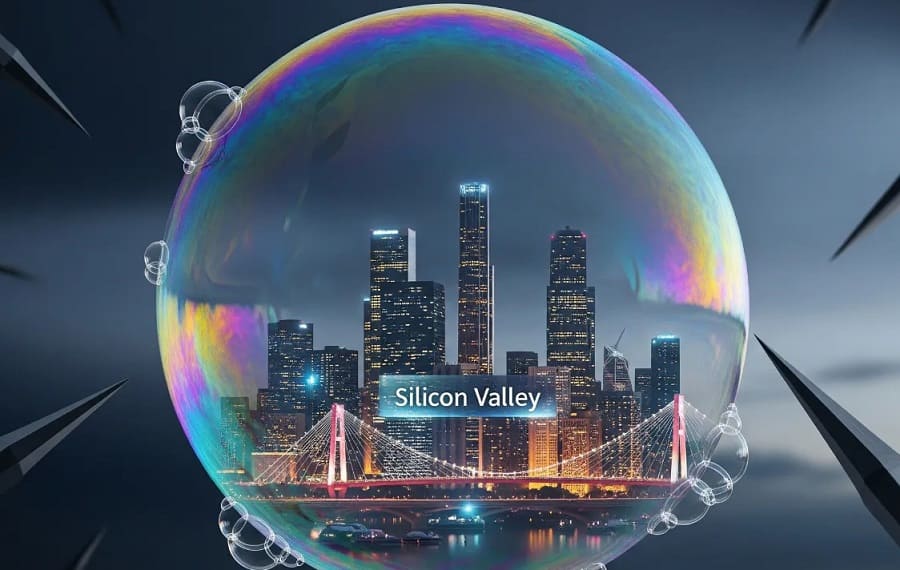
But this monumental transformation also brings monumental risk. As The Economist notes, pouring vast amounts of money into companies that haven’t earned a single dollar in profit—and holding onto them in hopes of an uncertain future—dramatically increases the risk of massive losses. There’s no guarantee these giants of today won’t end up like the zombie unicorns of the past. This intense hype could easily collapse into yet another devastating bust.
Still, the temptation of catching the world’s first trillion-dollar private company is so powerful that no one seems willing to fold and walk away. All eyes are now on Silicon Valley, waiting to see if this massive dream will come true—or if it’s just another beautiful bubble destined to burst.