Have you ever seen an AI create a picture from just a few words, like “a cat riding a bicycle in space,” and wondered how is that even possible? You’re not alone. Tools like DALL·E, Midjourney, and Stable Diffusion have amazed people around the world by turning simple text into realistic or fantastical images. But how do they actually work?
Let’s break it down in simple terms.
What Is an AI Image Generator?
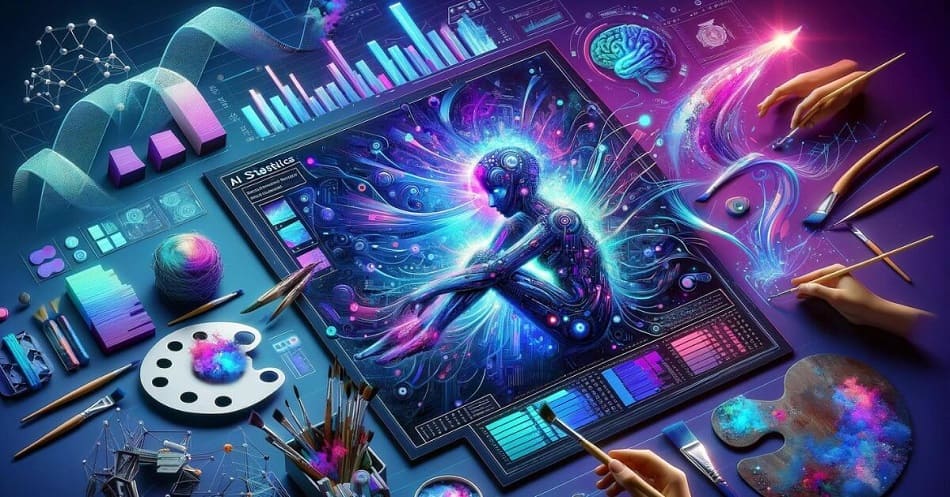
An AI image generator is a type of artificial intelligence that can create pictures from descriptions written in natural language. You type something like “a robot painting a sunset,” and the AI draws an image that matches your description — all without any human doing the drawing.
The most well-known of these tools is DALL·E, developed by OpenAI (the same organization behind ChatGPT).
It’s Not Magic—It’s Training
To understand how these tools work, imagine you want to teach a child to draw. You show them millions of pictures and tell them what each one is — “this is a dog,” “this is a car in the rain,” “this is a painting of a mountain.” Over time, the child learns what things look like and how they relate to the words.
AI image generators learn the same way. They are trained on huge datasets made up of billions of images and the text descriptions that go with them. For example:
- A photo of a dog labeled “a golden retriever playing in the park”
- A painting labeled “an impressionist landscape at sunset”
- A drawing labeled “cartoon dragon eating pizza”
By seeing patterns in both the images and the words, the AI learns how to connect language to visuals.
How Does the AI “Draw” the Image?
The secret ingredient behind tools like DALL·E is something called a diffusion model. Here’s a simplified explanation:
- Start with noise: The AI begins with a random static image — like the snow on an old TV screen.
- Step-by-step creation: It gradually removes the noise and shapes it into a clear picture based on your prompt.
- Refinement: The AI compares its result to its internal understanding of what the image should look like, improving it as it goes.
You can think of it like watching a painting slowly appear from a cloud of smoke.
Understanding the “Prompt”
The text you give the AI is called a prompt. The more detailed and creative your prompt, the more control you have over the result. For example:
- Simple prompt: “A cat”
- More detailed: “A watercolor painting of a white cat wearing sunglasses, sitting on a beach at sunset”
The AI uses your words to decide:
- What objects should appear
- What style the image should have (photo, painting, cartoon, etc.)
- What colors, lighting, and perspective to use
Can It Really Be Called “Art”?
This is a big question in the world of AI. The images are visually impressive, but is the AI creating or just copying?
While AI doesn’t have emotions, imagination, or personal expression like a human artist, it does create new images that have never existed before. It’s not copying one specific photo; it’s combining ideas it has learned in creative ways.
Think of it as a powerful tool — like a camera, a paintbrush, or Photoshop — but one that understands language.
The Ethical Questions
As with any powerful tool, AI image generators raise important concerns:
- Art theft: Some artists worry their work was used to train AI without permission.
- Deepfakes: These tools can also be misused to create fake or misleading images.
- Job impact: People in creative industries wonder how this will affect careers in art and design.
These are real issues, and society is still figuring out how to handle them responsibly.
Let’s Recap
AI image generators like DALL·E are amazing examples of what modern artificial intelligence can do. They don’t have creativity like humans, but they’re trained on so much data that they can simulate creativity in fascinating ways.
For everyday users, they offer a fun and powerful way to turn imagination into visual art — just by typing.
Whether you’re a curious beginner or an aspiring artist, exploring these tools is a great way to see the future of creativity and technology.