


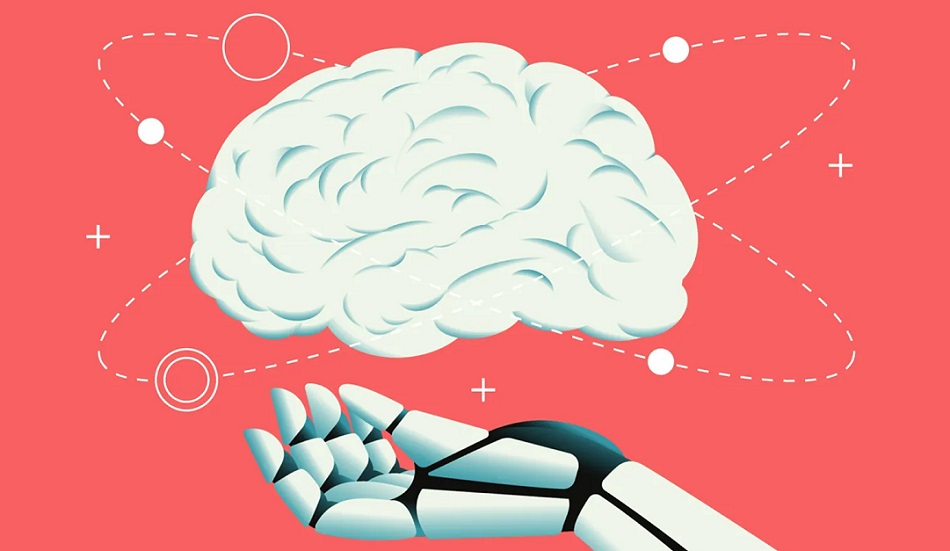
A newly designed artificial intelligence system can now predict human behavior in any situation with unprecedented accuracy.
Researchers have developed a new AI system called Centaur, capable of simulating and predicting human thought processes and behaviors far more accurately than previous models. This achievement paves the way for advanced research in fields such as psychology, cognitive science, and human-machine interaction.
The Centaur model was trained using more than 10 million real decisions made by participants in various psychological experiments. According to the researchers’ published paper, the model was able to predict and reconstruct human thinking and behavior with approximately 64% accuracy.
Previous AI models could somewhat predict human behavior, but not at this level of precision. Brenden Lake, a psychology and data science researcher at New York University who was not involved in the study, told Live Science, “Centaur is a step beyond previous models in terms of predictive power.”
What is Centaur?
Centaur is a type of AI model built on human cognitive processes, trained using a specialized dataset called Psych-101. According to the researchers, this dataset includes behavioral data from over 60,000 individuals across 160 different psychological experiments, encompassing more than 10 million individual decisions. The project researchers believe this dataset may be the largest human behavioral database in the world.
Marcel Binz, lead author of the study and a researcher at the Helmholtz Center for Human-Centered AI in Germany, explained: “Essentially, we present the model with a complete version of a psychology experiment, including everything the participant heard, saw, or did.” Researchers then asked the model to predict participants’ choices in specific scenarios. If the model gave a different response from the actual participant behavior, it was adjusted by correcting that prediction. This process was repeated over and over until Centaur could consistently produce accurate predictions.
When tested, the Centaur model outperformed several well-known models in the field of human reasoning, demonstrating greater accuracy in predicting human behavior in all cases. A unique feature of this model is its ability to predict human choices even in situations it had never encountered during training.
Interestingly, the Centaur model can also adapt to changing situations and even predict human reaction times. Binz says: “We’ve built a tool that, like a virtual laboratory, allows us to predict human behavior in any situation described in natural language.”
Binz and his team plan to continually improve the model. They hope to expand the Psych-101 dataset by adding demographic and psychological information such as age, socioeconomic status, and personality traits to enhance the model’s training capabilities. These details would enable Centaur to predict behaviors based on individual characteristics.
The researchers’ next goal is to use Centaur as a proxy for the human brain, to explore whether specific patterns observed in the model’s data processing correlate with human decision-making. According to them, this could help answer questions about how humans process information and the differences in decision-making between healthy individuals and those with psychological disorders.
Binz says: “Right now, we essentially have a black-box model that predicts human behavior very well.” In other words, they know what decision Centaur predicts, but not how it reaches that decision.
According to Lake, the key question now is whether Centaur merely predicts human behaviors or actually reconstructs our internal cognitive processes. He asks: “Has this model truly captured human mental processes, or is it just mimicking the outcomes?”
Centaur opens new frontiers in psychology and health research. Its applications include predicting human behavior in clinical settings, improving experiment design, and analyzing psychological studies. For instance, researchers can use the model to design experiments that more clearly reveal a target phenomenon or require fewer participants.
Dr. Lake is especially excited about the model’s educational applications. He says: “In the long term, if we can predict how a student learns and analyzes problems, then we can simulate the impact of different teaching strategies—something that could fundamentally change the equation of education.”
The study was published in the journal Nature.


